The Power Outage Call: When the Pump Never Stood a Chance
One Elwood homeowner called us at 2:14am during a July derecho. The power had been out for four hours, the primary sump pump was electric only, and there was no battery backup. By the time we arrived with truck-mounted extractors, the basement held just under three inches of clean groundwater across roughly 900 square feet. That is around 1,680 gallons sitting on a finished floor.
We classified it as Category 1 water on arrival, which kept the claim cleaner with her insurer. Category 1 means clean source water, and it gave us permission to attempt to save the LVP flooring and the lower drywall if we moved fast. Within 45 minutes we had standing water down to a damp sheen. Within four hours we had 18 air movers and four commercial dehumidifiers running. Total drying time was 72 hours, and the final invoice landed near $4,800, with her deductible at $1,000. The fix she should have had in place before the storm was a battery backup pump, which runs $300 to $700 installed.
What made her case sting more was that her neighbor two doors down had the same storm, the same outage, and zero water in the basement. He had spent $550 on a marine-grade battery backup the previous spring after watching a friend go through exactly this kind of cleanup. The math on prevention versus restoration is almost never close.
The Stuck Float Switch: A Slow Disaster
A different Elwood call came in on a Tuesday morning. No storm, no power outage. The homeowner had heard the pump running on and off for two days and assumed it was fine. The float switch had jammed against the pit wall, the pump burned out, and groundwater slowly filled the basement to about an inch and a half over 36 hours.
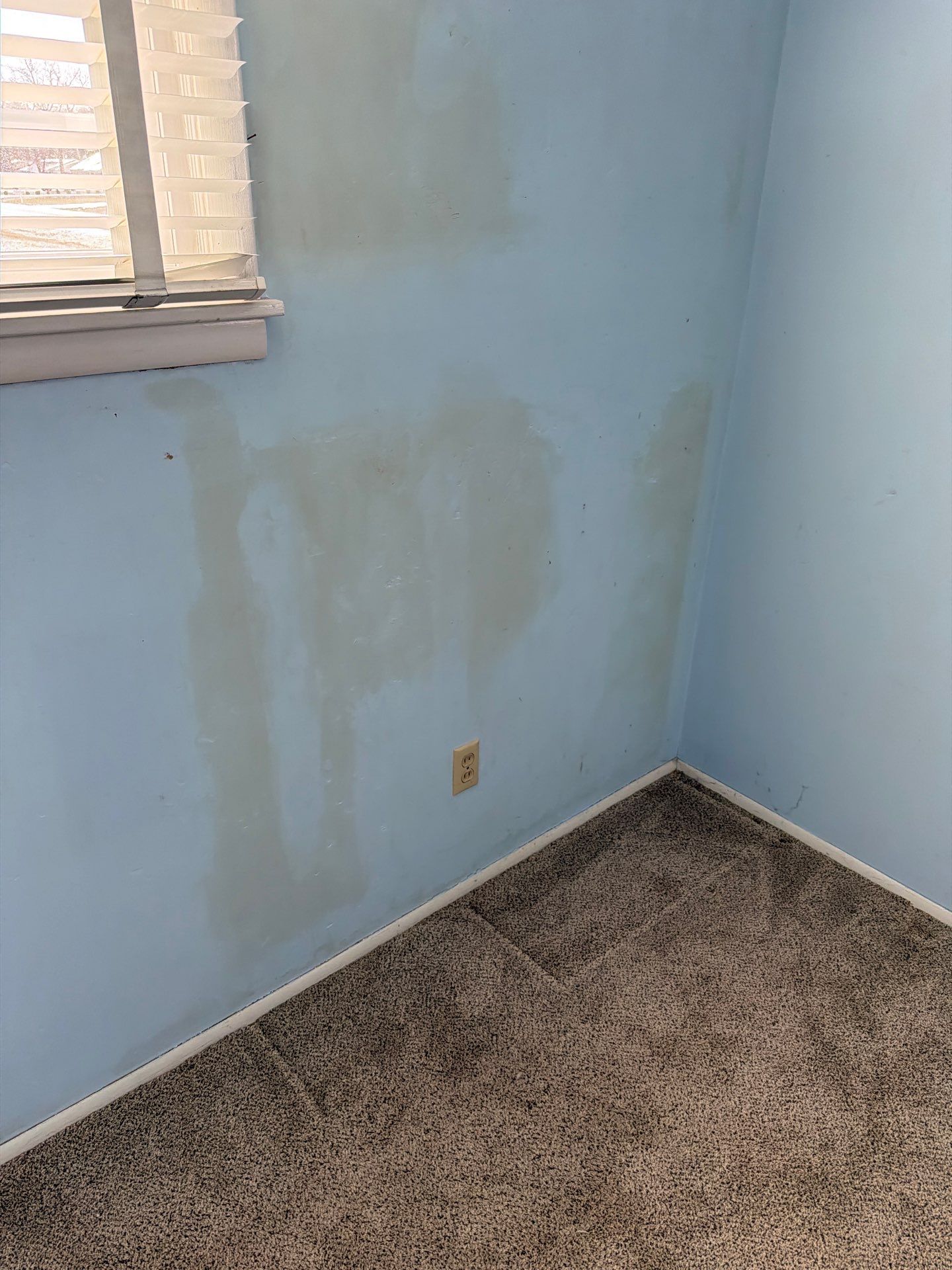
Slow floods are deceptively expensive. Water had time to wick eight inches up the drywall, saturate the bottom plates, and migrate under a built-in bookcase. Our moisture meters showed readings above 25 percent in framing that looked dry to the eye. We had to perform flood cuts at 24 inches, remove baseboard along three walls, and dry the cavity behind the bookcase with injection drying. That job ran six days and just over $7,200. If you want a deeper look at how this kind of cleanup unfolds, our walkthrough on flooded basement cleanup, professional drying, and cost covers the full process.
The lesson buried in that invoice is that an audible alarm on the pit would have caught the problem on day one. A basic high-water alarm runs about $25 at any hardware store and screams loud enough to wake you up. Smart alarms that ping your phone start around $80. Either one would have saved this homeowner more than $7,000.
What to Do in the First 30 Minutes
If you are standing in water right now, kill power to the basement at the breaker before you step in. Move what you can lift to higher ground. Take photos of everything before anyone moves it, because your adjuster will want timestamped documentation. Do not run a shop vac on more than an inch of water unless you know it is rated for it. Call a restoration company that can extract, not just a plumber who can swap the pump.
The pump replacement is the easy part. The drying, the moisture mapping, the mold prevention, and the insurance paperwork are where most homeowners get buried. Elwood Water Restoration handles all of it, and we coordinate directly with your adjuster so you are not on the phone explaining IICRC terminology. Our broader basement flooding response covers extraction, structural drying, content handling, and reconstruction under one roof.
The Sewage Backup Disguised as a Sump Failure
One of the harder calls we get sounds like a sump pump problem and turns out to be something worse. A homeowner in a 1960s Elwood ranch called us because his basement was flooding and he assumed the pump had quit. When our technician arrived, the smell told a different story. The municipal sewer had surcharged during heavy rain and was pushing back through the basement floor drain. The sump pump was actually working fine. It just could not keep up with contaminated water entering from a second source.
That is a Category 3 situation under IICRC S500 standards, and the response protocol changes completely. Porous materials get removed, not dried. PPE goes up, containment goes in, and antimicrobial application becomes mandatory. We documented every step for his adjuster. Final claim paid out at $11,400. If you suspect any sewer involvement, our sewage cleanup team handles those jobs under separate protocols for a reason.
What Actually Causes Sump Pump Failures in Elwood
After seven years of these calls, the failure modes cluster into a short list:
- Power loss during the exact storm that causes the flooding (most common)
- Stuck or tangled float switch, especially in pits without a proper lid
- Burned out motor from a pump older than 8 to 10 years
- Frozen or clogged discharge line venting outside
- Check valve failure causing the pump to cycle on its own runoff
- Undersized pump for the actual water volume entering the pit
The Numbers You Should Plan Around
For a typical Elwood sump pump failure with one to three inches of clean water across an unfinished basement, expect $2,500 to $5,500 for full extraction and drying. Finished basements with drywall, carpet, and trim usually run $6,000 to $12,000. Add a sewage component and you are typically in the $10,000 to $18,000 range. Most homeowner policies cover sudden discharge from a failed pump when you carry the sump and sewer backup endorsement, which usually adds $50 to $100 a year to your premium and is the single best insurance buy in central Indiana.
The Frozen Discharge Line in February
One January call still sticks with our crew. A Elwood homeowner returned from a long weekend to find six inches of icy water in his basement. The pump had been cycling constantly, but the outdoor discharge pipe had frozen solid against a north-facing foundation wall. Every time the pump ran, the water had nowhere to go and recirculated through the check valve back into the pit. The motor finally seized around hour 30.
We extracted just over 3,000 gallons in that job. The fix going forward was simple. An IceGuard fitting on the discharge line gives water an emergency exit if the main line freezes, and it costs under $50. Winter sump failures are the ones homeowners almost never plan for, and they account for roughly one in five calls we take between December and March.